What is new in the world? Nothing. What is old in the world? Nothing. Everything has always been and will always be. -Sai Baba
The Universe is expanding, eventually it will be a cold dark place. In time, there will be too much space between the elements of subatomic particles to exist as matter, all matter will become energy, the universe will cease to exist. Time is just a line between 2 notions. Our first subject is a notion of something old. In music and art, time is relative too. Something that originated in a prior time can be quite new and exciting if you never encountered it before. I am imagining contemporary renditions of some "baby boomer" classics-
Bob Dylan: Like A Kidney Stone... Herman's Hermits: Mrs. Brown, You've Got a Lovely Walker... Ringo Starr: I Get By With a Little Help From Depends... Roberta Flack: The First Time Ever I Forgot Your Face... Abba: Denture Queen... Paul Simon: Fifty Ways to Lose Your Liver... Willie Nelson: On the Commode Again... Johnny Nash: I Can't See Clearly Now .... Papa's Got A Brand New Colostomy Bag... I Am Woman, Hear Me Snore... Or A Whiter Shade Of Gray...
Something old, something new, something borrowed, something blue. This old advice offered to brides is well known, but where did the tradition come from? Well ,the often forgotten next line reveals the origin.
Something old, something new Something borrowed, something blue And a silver sixpence in her shoe.
A sixpence is a coin that was minted in Britain from 1551 to 1967. It was made of silver and worth six pennies. So this wedding tradition is definitely English, as is Procol Harum.
SOMETHING OLD-
Did Someone say Procol Harum? The British rock band, formed in the 1960s, who arguably laid the foundation for all progressive rock, symphonic rock, and art rock. They are best remembered for "A Whiter Shade of Pale" released in 1967, which is a staple item on classic rock polls. Procol Harum, largely known for their symphonic style, were equally adept at the blues, and pure pop. What makes this music so special? The velvet vocals of Gary Brooker, the Bach influenced keyboard lines provided by Hammond organist Matthew Fisher, Robin Trower's guitar musings, and the incomparable lyrics of Kieth Reid which tie the repertoire together. Those familiar with the band's voluminous catalog hopefully will have some memories stirred, and those who are unfamiliar hopefully have some fertile grounds to explore.
2 of my favorite lyrics (though they all are quite interesting), are from the "Shine On Brightly" album:
Glimpses Of Nirvana
Words by Keith Reid
In the darkness of the night, only occasionally relieved by glimpses of Nirvana as seen through other people's windows, wallowing in a morass of self-despair made only more painful by the knowledge that all I am is of my own making ...
When everything around me, even the kitchen ceiling, has collapsed and crumbled without warning. And I am left, standing alive and well, looking up and wondering why and wherefore.
At a time like this, which exists maybe only for me, but is nonetheless real, if I can communicate, and in the telling and the bearing of my soul anything is gained, even though the words which I use are pretentious and make you cringe with embarrassment, let me remind you of the pilgrim who asked for an audience with the Dalai Lama.
He was told he must first spend five years in contemplation. After the five years, he was ushered into the Dalai Lama's presence, who said, 'Well, my son, what do you wish to know?' So the pilgrim said, 'I wish to know the meaning of life, father.'
And the Dalai Lama smiled and said, 'Well my son, life is like a beanstalk, isn't it?'
Held close by that which some despise which some call fake, and others lies And somewhat small for one so tall a doubting Thomas who would be? It's written plain for all to see for one who I am with no more it's hard at times, it's awful raw
They say that Jesus healed the sick and helped the poor and those unsure believed his eyes - a strange disguise Still write it down, it might be read nothing's better left unsaid only sometimes, still no doubt it's hard to see, it all works out
Shine On Brightly Words by Keith Reid
My Prussian-blue electric clock's alarm bell rings, it will not stop and I can see no end in sight and search in vain by candlelight for some long road that goes nowhere for some signpost that is not there And even my befuddled brain is shining brightly, quite insane
The chandelier is in full swing as gifts for me the three kings bring of myrrh and frankincense, I'm told, and fat old Buddhas carved in gold And though it seems they smile with glee I know in truth they envy me and watch as my befuddled brain shines on brightly quite insane
Above all else confusion reignsAnd though I ask no-one explainsMy eunuch friend has been and goneHe said that I must soldier onAnd though the Ferris wheel spins roundmy tongue it seems has run agroundand croaks as my befuddled brainshines on brightly, quite insane
At various points, the Musicians who performed with Procol Harum include : Gary Brooker · Geoff Dunn · Matt Pegg · Josh Phillips · Geoff Whitehorn · Keith Reid Dave Ball · Graham Broad · Dave Bronze · Mark Brzezicki · Alan Cartwright · Chris Copping · Matthew Fisher · Mick Grabham · Bobby Harrison · David Knights · Dee Murray · Tim Renwick · Ray Royer · Don Snow · Pete Solley · Henry Spinetti · Jerry Stevenson · Robin Trower · Ian Wallace · B.J. Wilson · Guy Stevens · Bill Eyden · and Tim Renwick.
Their studio albums include: Procol Harum · Shine On Brightly · A Salty Dog · Home · Broken Barricades · Grand Hotel · Exotic Birds and Fruit · Procol's Ninth · Something Magic · The Prodigal Stranger · and The Well's on Fire . (Also Secrets of the Hive,a "best of" double CD released in 2007) They also have the live recordings:
Procol Harum Live with the Edmonton Symphony Orchestra and One More Time - Live in Utrecht 1992.
Douglas Adams's second book in the Hitchhiker Trilogy, "The Restaurant At the End of the Universe," was inspired by the song "Grand Hotel", from Procol Harum's album of the same name; according to his account in "The Salmon of Doubt: Htchhiking the Galaxy One Last Time" - a posthumous collection of previously unpublished material which was published in 2001. Why should this be in your MP3 player? The melancholy vocal delivery of Brooker, combined with the brilliant poetry of Keith Reid, the dark humor, excellent orchestrations, dramatic drumming, imperial Hammond organs, and virtuous guitar explorations should merit your attention.
SOMETHING NEW-
The Mayfire
Bolero Punk
Often new musical trails are blazed by combining existing genres that have not previously been deemed compatible. This band is led by guitarist Cattarina “Cat” Tasso - who refers to herself as a “Chilean girl playing a Canadian guitar”—The May Fire is a staunchly independent act with an ironclad D.I.Y. ethic. Their style mixes musical and cultural influences from three different countries (co-guitarist Nachito and drummer El Pipe are Columbian, and bassist Rob Gwin hails from Connecticut,USA). The band shifts through grunge, indie, latin, and punk gears in a calculated and quirky manner.
Cat Tasso
“Moving to San Francisco from Los Angeles did something to me,” said Tasso in a recent interview with Deirdre H. Jones for Guitar Player Magazine. “I was so mad that the weather was cold and gloomy all the time that my style began to morph to reflect my dark surroundings. My guitar playing became sullen and loud and more to the point. The volume became a wall that I could feel as much as hear. Now I love my sound, so I think the weather grew on me!”
"In Chile, I would stay up late with my parents, and listen to opera, as well as boleros and tangos from Argentina. My mom taught me a little Spanish riff on the guitar when I was 12, but I mostly studied classical piano. I quit piano because I didn’t like to practice, and I picked up the guitar again after somebody mysteriously left some old guitar lesson books in my mailbox."
"My style is messy and raw. It’s decent by accident. It developed through time as I tried to figure out why my power chords weren’t cool. There’s nothing too complicated about power chords, but I discovered that you need to have a special mojo when you play them. When I heard David Gilmour on Pink Floyd’s Animals, my mind understood life in a completely different way. I think maybe he brainwashed me. In the May Fire, I typically play the body of the song and the riffs, and Nachito dresses things up with his solos and tones. He can play with a lot of precision, but he can also be strange and moody."
The Spanish Bolero is a noticeable influence on the songwriting though it is heavily filtered through a punk lens. The steady pulse is prominent, this is dance music. But it is not limited to dance music. It's unusual combination of flavors, akin to an aguardiente flavored toffee candy dusted in a fine habanero powder, makes this something new. Their music is available here.
SOMETHING BORROWED-
Bryan Ferry's DylanesqueI am a longtime fan of Ferry's approach to music, I've always believed he possessed one of the most unique voices in modern music. The fact that he did not get the gig with King Crimson allowed Roxy Music to flourish. I had the pleasure of seeing him do an entire evening of Cole Porter tunes a few years ago with a full orchestra. Truly stunning. Bryan is no stranger to "borrowed" songs but this CD is remarkable and a "must have". Here is a clip of "Just Like Tom Thumb Blues" from the David Letterman Show.
Though I imagine the purists may believe Dylanesque is sacrilege or perhaps view this CD as simply blasphemous, but the Roxy Music singer vastly refines Just Like Tom Thumb's Blues and All Along the Watchtower with an edgy agitation and his personal classicist touch. His treatment reveals both flaw and beauty in the songs of Bob Dylan gone previously unseen. A breathtaking and exquisite listening experience. Cue it up!
SOMETHING BLUE-
The extraordinary Chicago Blues Festival has grown leaps and bounds since it's inception twenty-five years ago and now spotlights over ninety performances on six stages from 11 a.m. to 9:30 p.m. The Chicago Blues Festival is undeniably one of the biggest and best Blues events on the planet, attracting hundreds of thousands of people from all around the globe to Grant Park, year after year.
This Year the Festival is June 5-8, 2008.
Admission into the Chicago Blues Festival in Grant Park is Free!
All the concerts are free admission.
Food and beverage tickets are sold in strips of 12 for $8.00.
The Main Stage at the Petrillo Music Shell events are as follows:
Thursday, June 5, 2008 "Catfish Blues" 6:00-7:00 - Big Time Sarah and the BTS Express 7:10-8:20 - Duke Robillard's Tribute to Louis Jordan featuring Plas Johnson and Red Holloway 8:30-9:30 - Johnny Winter w/James Cotton
Friday, June 6, 2008 "Sweet Home Chicago" 6:00-7:15 - "Blasts From the Past" featuring Ruby Andrews, Cicero Blake, and Sugar Pie DeSanto with Willie Henderson 7:25-8:25 - Eddy "The Chief" Clearwater's West Side Strut with special guests Lonnie Brooks, Jimmy Johnson, Ronnie Baker Brooks, Otis Clay and Billy Branch 8:35-9:30 - Koko Taylor and Her Blues Machine
Saturday, June 7, 2008 "Let the Good Times Roll" 5:00-6:00 - Lil Ed and the Blues Imperials 6:10-7:05 - Barbara Lynn with Lil' Buck and the Buckaroos 7:15-8:25 - Theodis Ealey 8:35-9:30 - Buckwheat Zydeco
Sunday, June 8, 2008 "Everyday I Have the Blues" 5:00-6:10 - Karen Carroll w/ Charlie Love and special guest Lurrie Bell 6:30-7:25 - Magic Slim and the Teardrops 7:35-8:05 - Little Willie Littlefield 8:15-9:30 - B.B. King
Other stages include:
The Front Porch Stage-
Thursday, June 5, 2008 "Catfish Blues" 11:00-12:15 - Blues in the Schools w/ Katherine Davis, Erwin Helfer, Eric Noden and the Stone Academy Blues All Stars 12:45-2:00 - Professor Fernando Jones Columbia College Blues Ensemble 2:30-3:45 - David Honey Boy Edwards and Friends (Billy Branch, Louisiana Red, Paul Kaye, Aron Burton, and Johnny Yard Dog Jones) 4:15-5:30 - Pinetop Perkins with more friends (Willie Smith, Bob Margolin, Bob Stroger, Kenny Smith) 6:00-7:00 - Inetta Visor
Friday, June 6, 2008 "Sweet Home Chicago" 11:00-12:00 - Keith Frank and the Soileau Zydeco Band 12:30-1:30 - Little Willie Littlefield 2:00-3:15 - Jo Jo Murray and Joy Hills 3:45-5:00 - Peaches and the Groove Shakers 5:30-7:00 - Tear Drop Sessions
Saturday, June 7, 2008 "Let the Good Times Roll" 11:00-12:00 - Shorty Mack and the Magnificent R&B Blues Band 12:30-1:30 - Liz Mandville and the Blue Points 2:00-3:00 - Charles Hayes and the Hayes Family Band 3:30-5:00 - Recapturing the Banjo Project featuring Otis Taylor, Don Vappie, and Guy Davis 5:30-6:30 - John Hammond 7:00-8:00 - Milwaukee Blues All Stars ftg Stokes and Milwaukee Slim
Sunday, June 8, 2008 "Everyday I Have the Blues" 11:00-12:30 - Victory Travelers 1:00-2:00 - Marie Knight 2:30-3:30 - Tony Joe White 4:00-5:30 - Davell Crawford 6:00-7:30 - LaVelle White
At the Louisiana Bayou Station and Social Club stage-
Thursday, June 5, 2008 "Catfish Blues" 11:30-12:30 - Louisiana Red 1:00-2:00 - Nuwki Nu 2:30-4:00 - Keith Frank and the Soileau Zydeco Band 4:30-5:30 - Little Willie Littlefield
Friday, June 6, 2008 "Sweet Home Chicago" 11:30-12:30 - Little Arthur’s Backscratchers ftg. Reginald Cooper 1:00-2:00 - Les Getrex and Creole Cookin' 2:30-3:30 - Omar Shariff 4:00-5:30 - Bryan Lee & the Blues Power Band
Saturday, June 7, 2008 "Let the Good Times Roll" 11:30-12:30 - Little Willie Littlefield 1:00-2:00 - Guy Davis and the High Flying Rockets 2:30-3:30 - Bumble Bee Bob 4:00-5:00 - Omar Shariff
Sunday, June 8, 2008 "Everyday I Have the Blues" 11:30-12:30 - Geraldine and Donald Gay 1:00-2:00 - Davell Crawford 2:30-3:30 - Paul Geremia 4:00-5:00 - John Boutte
At the Gibson Guitar Crossroads stage-
Thursday, June 5, 2008 "Catfish Blues" 12:00-1:30 - Patricia Scott w/J.W. Williams 2:00-3:30 - Big Ray and Chicago's Most Wanted 4:00-5:30 - Sharon Lewis and Texas Fire
Friday, June 6, 2008 "Sweet Home Chicago" 12:00-1:30 - West Side Tribute to Jumpin' Willie Cobbs featuring Joe B Band 2:00-3:30 - Larry Taylor's West Side Blues and Soul Band 4:00-5:30 - The Taylor's Family Band
Saturday, June 7, 2008 "Let the Good Times Roll" 12:00-1:15 - Keith Frank and the Soileau Zydeco Band 1:45-3:15 - Chick Rogers 3:30-5:00 - PG Man
Sunday, June 8, 2008 "Everyday I Have the Blues" 12:00-1:15 - Rodney Brown's salute to Louis Jordan 1:30-2:45 - Big James Montgomery and the Playboys 3:15-4:30 - Charles Wilson
On the Mississippi Juke Joint stage-
Thursday, June 5, 2008 "Catfish Blues" 12:00-2:30 - A Day with Jimmy Burns featuring the Chicago Blues Round Robin 3:00-4:00 - L.C. Ulmer 4:30-5:30 - Jimmy Burns Blues Band 6:00-8:00 - Jam hosted by Jimmy Burns
Friday, June 6, 2008 "Sweet Home Chicago" 12:00-12:30 - Rising Star Fife and Drum featuring the Thomas Family 1:00-2:30 - Afrissisppi 3:00-4:00 - Sam Lay 4:30-5:30 - L.C. Ulmer 6:00-8:00 - Jam hosted by Kenny Smith
Saturday, June 7, 2008 "Let the Good Times Roll" 12:00-12:30 - Rising Star Fife and Drum: featuring the Thomas Family 1:00-2:00 - Theodis Ealey (Brothers Reunion) 2:30-4:00 - Juke Joint Duo: Cedric Burnside and Lightnin' Malcolm 4:30-5:30 - T-Model Ford 6:00-8:00 - Jam hosted by Rosa's All Star Jam Band Featuring James Wheeler
Sunday, June 8, 2008 "Everyday I Have the Blues" 12:30-1:00 - Rising Star Fife and Drum: featuring the Thomas Family 1:30-3:00 - Juke Joint Duo: Cedric Burnside and Lightnin' Malcolm 3:00-4:30 - T Model Ford 5:00-7:00 - Jam hosted by Kenny Smith
There are also more stages with performances throughout the festival.
The festival’s final night will be a majestic event with headliners that include Little Willie Littlefield, Bobby Parker and Karen Carroll with Charlie Love and special guest Lurrie Bell, and of course, B.B. King.
B.B. King, oft referred to as the King of the Blues, has honored stages worldwide, and now, at age 82, continues to tour as often as he did in his salad days. King has not played the Chicago Blues Festival since 1988, so this year will be a welcome return! Born Riley B. King, B.B. (Blues Boy) King has recorded more than fifty albums, many of them classics. With his agile left-hand vibrato and haunting vocal-like string bending, he is easily one of the most identifiable guitarists in the time space continuum, and of course nothing less than royalty in the blues world.
King has been an influence on an incalculable number of musicians, including Eric Clapton, Jeff Beck, and George Harrison; he has won numerous awards including a NARAS Lifetime Achievement Grammy Award, honorary doctorates, and in 1984, was inducted into the Blues Foundation Hall of Fame.
Duly Consider joining Little Willie Littlefield, Karen Carroll, Bobby Parker, Buckwheat Zydeco, Lil’ Ed and the Imperials, Koko Taylor, Eddy “the Chief” Clearwater, James Cotton and Johnny Winter this June. More information about this free festival can be obtained at www.chicagobluesfestival.us!
“Blues music is easy to play, but hard to feel”-Jimi Hendrix
PART II - A HISTORY OF CENSORSHIP "Did you ever hear anyone say 'that work had better be banned because I might read it and it might be very dangerous to me?’” -Author Joseph Henry Jackson
Up until about half way through the twentieth century, laws about censorship only applied to newspapers. They didn't apply to other mediums like motion pictures, broadcast radio, or TV. The internet was not in the equation yet.
Today, media dominates the lives of most inhabitants of planet Earth. On average, Americans for instance, spend 3,400 hours a year consuming media. Roughly, this is 40 percent of our lives devouring television, books, newspapers, computer and audio media. If you consider that we sleep on average 8 hours a day, or 33.3 percent. Our conscious hours are simply filled with media of one kind or another.
The works of some of our most influential writers have been condemned; classics that even changed the way people saw their world. Here’s a short list.
1984. By George Orwell.)This novel is "pro-communist and contains explicit sexual matter." (Apparently Big Brother doesn't want people reading books like this.)
The Adventures of Tom Sawyer. Mark Twain [Samuel L. Clemens]. Excluded from the childrens' room in the Brooklyn, N.Y. Public Library (1876) and the Denver, Colo. Public Library (1876). Confiscated at the USSR border (1930). Removed from the seventh grade curriculum in the West Chester, Pa. schools (1994) after parents complained that it contains racially charged language. (Novels from 1876 about a young boy growing up in the Antebellum South, must of course, be politically correct by today’s standards…Right!)
Alice's Adventures in Wonderland. Lewis Carroll. Banned in China (1931) for portraying animals and humans on the same level, "Animals should not use human language." (This story has a mock turtle in it!)
Analects. Confucius. The Chin Dynasty ordered all books relating to the teachings of Confucius burned. Oh, and hundreds of followers of Confucius buried alive as well (250 BC).
Anne Frank: The Diary of a Young Girl. Anne Frank. Modern Library. Challenged in Wise County, Va. (1982) due to "sexually offensive" passages. Four members of the Alabama State Textbook Committee (1983) called for the rejection of this book because it is a "real downer."
Arabian Nights or The Thousand and One Nights. Anonymous. U.S. Customs held up 500 sets of the translation by the French scholar Mardrus, which were imported from England (1927-31). It was confiscated in Cairo, Egypt (1985), on the grounds that it contained obscene passages which posed a threat to the country's moral fabric. It was judged inappropriate for Jewish pupils by the Israeli director of the British Consul Library in Jerusalem, Israel (1985). (Arabs and Israelis can agree, after all, on some things eh?)
Beloved. Toni Morrison. This 1987 Pulitzer Prize winning novel that is required reading in many advanced placement English classes was challenged at the St. Johns County Schools in St. Augustine, Fla. In 1995. It was again challenged in Madawaska, Maine in 1997.
The Bible. William Tyndale who was translating the Bible into English, was captured, strangled, and burned at the stake in 1536 by opponents of the movement to translate the bible. Beginning around 1830, "family friendly" bibles, like Noah Webster's version began to appear which had “exorcised” passages considered indecent.
Brave New World. By Aldous Huxley was banned in Ireland in1932. Removed from classrooms in Miller, Mo. (1980). Challenged at the Yukon, Okla. High School in 1988; challenged in the Corona-Norco, Calif. Unified School District (1993) because the book "centered around negative activity. (Someone didn’t take their SOMA I presume.)
Bury My Heart at Wounded Knee. ByDee Brown. Removed by a district administrator in Wisconsin for being "slanted." The administrator also said "if there's a possibility that something might be controversial, then why not eliminate it."
The Call of the Wild. By Jack London. Banned in Italy (1929), Yugoslavia (1929), and burned in Nazi bonfires (1932). (Nazi’s were against sled dogs I guess.)
Cannterbury Tales. Geoffrey Chaucer. People have long been squeamish with this one...It was subjected to revisions as 1928, and editions today tend to avoid four letter words. It was removed from a senior college preparatory literature course at the Eureka, Ill. High School (1995) for sexual content. (Would Chaucer be entertained? I imagine so.) (Purchase The Riverside Chaucer, complete and untranslated)
J.D. Salinger’s Catcher in the Rye which waspublished in 1951, became an instant best seller and simultaneously a perennial target of censorship. Numerous attempts were made in Fla. to have it banned due to "profanity, reference to suicide, vulgarity, disrespect, and anti-Christian sentiments."
The Celluloid Closet: Homosexuality in the Movies.By Vito Russo. Challenged at the Deschutes County Library in Bend, Oreg. (1993) because it "encourages and condones" homosexuality. (The title might have been a tip off that it was about homosexuality…)
Charlie and the Chocolate Factory. RoaldDahl. Removed from a locked reference collection at the Boulder, Colo. Public Library (1988), where it had been placed because the librarian thought the book espoused a poor philosophy of life. (I always did think this was pretty weird, but banning? Oompaloompa!)
Clan of the Cave Bear. By Jean Auel. "Hardcore graphic sexual content." got this book removed in 3 school districts in the U.S.
The Color Purple. Alice Walker. Deemed inappropriate reading material for an Oakland, Calif. High School honors class in 1984 due to the work's "sexual and social explicitness" and its "troubling ideas about race relations, man's relationship to God, African history, and human sexuality." This Pulitzer Prize-winning novel was finally approved for use by the Oakland Board of Education after nine months of debate. Banned in the Souderton, Pa. Area School District in 1992, because it was "smut." Removed from the Jackson County, W.Va. school libraries in 1997.
The Complete Fairy Tales of the Brothers Grimm. Jacob and Wilhelm K. Grimm. Translated by Jack Zipes. excessive violence, negative portrayals of female characters, and anti-Semitic references.
Dialogue Concerning the Two Chief World Systems. Galilei Galileo. Banned by Pope Urban VIII for heresy and breach of good faith (1633). ( Time wounds all heels…).
Different Seasons. Stephen King. Removed from the West Lyon Community School library in Larchwood, Iowa (1987) because "it does not meet the standards of the community." Removed from the Washington Middle School library in Meriden, Conn. (1989) after a parental complaint. Challenged at the Eagan High School in Burnsville, Minn. (1992). (This collection of novellas, which include stories on which the acclaimed movies Stand by Me and The Shawshank Redemption were based, is arguably King's best writing.)
A Doll's House. Henrik Ibsen. Members of the Alabama State Textbook Committee (the same who objected to The Diary of Anne Frank?) called for the rejection of this work because it propagates feminist views.
Don Quixote. Saavedra Miguel de Cervantes. Banned in Madrid for the sentence, "Works of charity negligently performed are of no worth." (There are cobwebs in the windmills of some minds I guess).
Earth Science. American Text Book. Challenged at the Plymouth-Canton school system in Canton, Mich. (1987) because it "teaches the theory of evolution exclusively. It completely avoids any mention of Creationism...The evolutionary propaganda also underminds {sic} the parental guidance and teaching the children are receiving at home and from the pulpits." (I guess they banned the spelling book too!)
The Egypt Game. ZilphaKeatley Snyder. Award-winning novel was challenged in the Richardson, Tex. schools (1995) because it shows children in dangerous situations, condones trespassing and lying to parents and ostensibly teaches about the occult
Fahrenheit 451. Ray Bradbury. In a burst of irony, students at the Venado Middle School in Irvine, Calif. received copies of the book with scores of words--mostly "hells" and "damns"--blacked out. (The novel is about book burning and censorship.)
The Figure in the Shadows. John Bellairs. Removed from El Mirage, Ariz. Libraries because of 2 uses of profanity allusions to magic.
Gone with the Wind. Margaret Mitchell. This Pulitzer Prize winning novel was banned from the Anaheim, Calif. Union High School District English classrooms in 1978 and Waukegan, Ill. School District in 1984.
Grapes of Wrath. John Steinbeck. Burned by the St. Louis, Mo. Public Library in 1939. Banned in Kansas City, Mo. (1939); Kern County, Calif., (where much of the story takes place), (1939); Ireland (1953); Kanawha, Iowa High School classes (1980); and Morris, Manitoba (1982). Challenged in the Greenville, S.C. schools (1991) because the book uses the name of God and Jesus in a "vain and profane manner along with inappropriate sexual references." I thought the turtle was cool.
The Graphic Work of M.C. Escher. M.C. Escher. Maldonado Elementary School in Tucson, Ariz. attempted to ban this for "pornographic", "perverted", and "morbid" themes. Perhaps dogs playing cards would be in a museum there. Or maybe it just didn’t match their sofa….
Grendel. John C. Gardner. This book has been challenged quite a lot by people who have not read Beowulf. The novel was “too obscene and violent”.
Gulliver's Travels. Jonathan Swift. Denounced as wicked and obscene in Ireland (1726), which was no doubt the effect Swift was going for.
Hamlet. William Shakespeare. Banned in Ethiopia in 1978.
The Rights of Man and The Age of Reason , by Thomas Paine. Not only was Paine indicted for treason in England but the publishers of The Age of Reason were also prosecuted just for printing the book.
Lady Chatterly's Lover, by D.H. Lawrence, went to many trials both in the U.S. and U. K. for obscenity.
The Happy Prince and Other Stories. Oscar Wilde’s book won’t be found at the Springfield, Oregon Public Library because the stories are "distressing and morbid."
Howl, a poem by Allen Ginsberg, survived many censorship trials and continues to be one of the most read poems of the twentieth century. The poem has also been translated into 22 languages.
I Know Why the Caged Bird Sings. Maya Angelou’s book gets challenged often, due to the poet's accounts of being raped as a young girl.
It. By Stephen King was challenged at the Lincoln, Nebr. school libraries in 1987; and placed on a "closed shelf" at the Franklinville, N.Y. Central High School library. Another story with a turtle!
James and the Giant Peach. RoaldDahl. Challenged at the Deep Creek Elementary School in Charlotte Harbor, Fla. (1991) as "not appropriate reading material for young children." Challenged at the Pederson Elementary School in Altoona, Wis. (1991) and at the Morton Elementary School library in Brooksville, Fla. (1992) because the book contains the word "ass" and "promotes" the use of drugs (tobacco and snuff) Removed from classrooms in Stafford County, Va. Schools (1995) and placed in restricted access in the library because the story contains crude language and encourages children to disobey their parents and other adults.
King Lear. William Shakespeare. Now considered to be among Shakespeare's greatest works, Lear was performed in drastically adapted form--Nahum Tate's Restoration version eliminated characters and had a happy ending in which Lear is restored to the throne and Cordelia survives. The play was subject to political censorship when it was banned from the English stage from 1788 to 1820, out of respect to King George III's alleged insanity. The tragic ending of King Lear was not restored until 1823, and the character of the fool was finally reintroduced in 1838.
The Koran. Penguin; TahrikeTarsil; Quran. Ban lifted by the Spanish Index in 1790. Restricted to students of history in the USSR (1926).
Le MorteD'Arthur. Sir Thomas Malory. Challenged as required reading at the Pulaski County High School in Somerset, Ky. (1997) because it is "junk."
The Life and Times of Renoir. Janice Anderson. Restricted at the Pulaski, Pa. Elementary School Library (1997) because of nude paintings in the book. It is about Renoir, he did paint nudes….
A Light in the Attic. Shel Silverstein. Challenged at the Cunningham Elementary School in Beloit, Wis. (1985) because the book "encourages children to break dishes so they won't have to dry them." Removed from Minot, N.Dakota Public School libraries when the superintendent found "suggestive illustrations." Challenged at the Big Bend Elementary School library in Mukwonago, Wis. (1986) because some of Silverstein's poems "glorified Satan, suicide and cannibalism, and also encouraged children to be disobedient.
The Lion, the Witch and the Wardrobe. C.S. Lewis. The Howard County, Md. school system (1990) banned it because it depicts "graphic violence, mysticism, and gore."
Little House in the Big Woods. Laura Ingalls Wilder. Removed from the classrooms, but later reinstated, for third-graders at the Lincoln Unified School District in Stockton, Calif. (1996). Complainants also want the book removed from the library because it "promotes racial epithets and is fueling the fire of racism."
Little House on the Prairie. Laura Ingalls Wilder. Banned in Louisiana and North Dakota.I question the wisdom of ignoring the works of bygone days because they are politically incorrect by today’s standards. We miss the truth of history, palatable or not.
The Lorax. Dr. Seuss. Challenged in the Laytonville, Calif. Unified School District (1989) because it "criminalizes the foresting industry."
The Lords of Discipline. Pat Conroy. Challenged in the Cobb County, Ga. schools (1992) for profanity and descriptions of sadomasochistic acts.
The Martian Chronicles. Ray Bradbury. Challenged at the Haines City, Fla. High School (1982) for profanity and the use of God's name in vain. Challenged at the Newton-Conover, N.C. High School (1987) as supplemental reading due to profanity. Challenged at the Gatlinburg-Pittman, Tenn. High School (1993) due to profanity.
My Friend Flicka. Mary O'Hara Removed from fifth and sixth grade optional reading lists in Clay County, Fla. schools (1990) because the book uses the word "bitch" to refer to a female dog
The Odyssey. Homer. Plato suggested expurgating it for immature readers (387 B.C.) and Caligula tried to suppress it because it expressed Greek ideals of freedom
On the Origin of Species. Charles B. Darwin. This Book got teacher John T. Scopes a criminal conviction after he lectured to his high school class in 1925 Tennessee. The state legislature repealed the law that prohibited teaching evolutionary theory in 1967. People have been proposing laws ever since that would restrict teaching evolution in science classes. Banned from Trinity College in Cambridge, UK (1859); Yugoslavia (1935); Greece (1937).
Raisin in the Sun. Lorraine Hansberry. The Ogden, Utah School District (1979) restricted circulation of Hansberry's play in response to criticism from an anti-pornography organization. (Pornography?Is this the same play that I read?)
The Rolling Stone Illustrated History of Rock and Roll. Jim Miller Challenged in Jefferson, Ky. (1982) because it "will cause our children to become immoral and indecent." ( I recall the very same thing said about polyphony)
The Satanic Verses. Salman Rushdie. Banned in Pakistan, Saudi Arabia, Egypt, Somalia, Sudan, Malaysia, Qatar, Indonesia, South Africa, and India due to its criticism of Islam. Burned in West Yorkshire, England (1989) and temporarily withdrawn from two bookstores on the advice of police. Five people died in riots against the book in Pakistan. Another man died a day later in Kashmir. Ayatollah Khomeini issued a fatwa, or religious edict, stating, "I inform the proud Muslim people of the world that the author of the Satanic Verses, which is against Islam, the prophet, and the Koran, and all those involved in its publication who were aware of its content, have been sentenced to death." Challenged at the Wichita, Kans. Public Library (1989) because it is "blasphemous to the prophet Mohammad."
Slaughterhouse-Five. Kurt Vonnegut Jr. Burned in Drake, N. Dak. (1973). Banned in Rochester Mich. because the novel "contains and makes references to religious matters. Challenged at the Owensboro, Ky. high School library (1985) because of "foul language, a reference to 'Magic Fingers' attached to the protagonist's bed to help him sleep, and the sentence: 'The gun made a ripping sound like the opening of the fly of God Almighty.'” Challenged, but retained on the Round Rock, Tex. Independent High School reading list (1996) after a challenge that the book was too violent.
Song of Solomon. Toni Morrison.Challenged, but retained in the Columbus, Ohio schools (1993). The complainant believed that the book contains language degrading to blacks, and is sexually explicit. Removed from required reading lists and library shelves in the Richmond County, Ga. School District (1994). Challenged at the St. Johns County Schools in St. Augustine, Fla. (1995). Removed from the St. Mary's County, Md. schools' approved text list (1998) by the school superintendant over the objections of the faculty. (So it goes…)
The Stand. Stephen King. Restricted at the Whitford Intermediate School in Beaverton, Oreg. (1989) because of "sexual language, casual sex, and violence."
The Talmud. Burned in Cairo, Egypt (1190); Paris, France (1244); and Salamanca, Spain (1490). The Catholic Church in the Middle Ages tried to suppress this work. Pope Gregory IX ordered it burned (1239); Pope Innocent IV ordered King Louis IX of France to burn all copies (1248 and 1254); Pope Benedict XIII ordered the bishops of the Italian dioceses to confiscate all copies (1415); Pope Julius III ordered that Christians reading the Talmud be excommunicated; Pope Clement VIII forbade both "Christians and Jews from owning, reading, buying or circulating Talmudic or Cabbalistic books or other godless writing." (1592)
To Kill a Mockingbird. Harper Lee. This novel has been challenged quite a lot due to its racial themes. Attempts to have it banned are as recent as 1996 in Texas.
Tom Jones. Henry Fielding. Banned in France (1749). So In France, they don’t think Tom Jones is very funny, but Jerry Lewis is a riot? Sacrebleu!
Twelfth Night. William Shakespeare Removed from a Merrimack, N.H. high school English class (1996) because of a policy that bans instruction which has "the effect of encouraging or supporting homosexuality as a positive lifestyle alternative."
Uncle Tom's Cabin. Harriet Beecher Stowe. Challenged in the Waukegan, Ill. School District (1984) because the novel contains an offensive racial epithet. Forget about the fact that this novel is often credited with raising public antislavery sentiment which led to the emancipation.
Vasilissa the Beautiful: Russian Fairy Tales. Challenged at the Mena, Ark. schools (1990) because the book contains "violence, voodoo, and cannibalism."
Welcome to the Monkey House. Kurt Vonnegut Jr. A teacher was dismissed for assigning this collection of short stories to her eleventh grade English class because the book promoted "the killing off of elderly people and free sex." The teacher brought suit and won in Parducci v. Rutland, in 1971.
Where the Sidewalk Ends. Shel Silverstein. Challenged at the West Allis-West Milwaukee, Wis. school libraries (1986) because the book "suggests drug use, the occult, suicide, death, violence, disrespect for truth, disrespect for legitimate authority, rebellion against parents." Challenged at the Central Columbia School District in Bloomsburg, Pa. (1993) because a poem titled "Dreadful" talks about how "someone ate the baby."
Where's Waldo? Martin Handford. Little. Challenged at the Public Libraries of Saginaw, Mich. (1989), Removed from the Springs Public School library in East Hampton, N.Y. (1993) because there is a tiny drawing of a woman lying on the beach wearing a bikini bottom but no top. (I think they were just pissed they didn’t find Waldo.)
The Witches of Worm. Challenged at the Hays, Kans. Public Library (1989) because it "could lead young readers to embrace satanism." The Newbery Award-winning book was retained on the approved reading list at Matthew Henson Middle School in Waldorf, Md. (1991) despite objections.
A Wrinkle In Time. Madeleine L'Engle. Challenged at the Polk City, Fla. Elementary School (1985) by a parent who believed that the story promotes witchcraft, crystal balls, and demons. Challenged in the Anniston Ala. schools (1990). The complainant objected to the book's listing the name of Jesus Christ together with the names of great artists, philosophers, scientists, and religious leaders when referring to those who defend earth against evil. (Why is this a bad thing?)
Zen Buddhism: Selected Writings. D.T. Suzuki. Challenged at the Plymouth-Canton school system in Canton, Mich. (1987) because "this book details the teachings of the religion of Buddhism in such a way that the reader could very likely embrace its teachings and choose this as his religion." (The last thing we need are a bunch of peaceful Buddhists!)
Does the government have he right to censor the words of Mark Twain, Allen Ginsberg, Thomas Paine, John Lennon, Bob Dylan, or Jello Biafra?
"A censor is a man who knows more than he thinks you ought to." Granville Hicks
In Part 1 of a History Of Censorship, we looked at events up to the 1970s. Let’s have a look at what transpired in the 1970s and 1980s. (I will be posting a “part 3” with a look at the 1990’s and 2000s in the near future.) The Beatles song “The Ballad of John and Yoko” is banned from airplay on many stations. A group known as the Movement to Restore Democracy calls for the banning of rock music to end the spread of Socialism in America and the MCA Record label drops 18 acts from their record label because they suspect the performers promote hard drugs in their songs. Among the perpetrators are Connie Francis and the Cowsills.
Directed by President Richard Nixon, Vice President Spiro Agnew incites general interest in censoring popular music by claiming it is laden with drug imagery. Agnew claims among other things that Lucy In The Sky With Diamonds is about promoting LSD ingestion. The songs composer, John Lennon, maintains the song title was taken from his son’s elementary school artwork. Who would know better? Agnew further critiques ''I get high with a little help from my friends,'' pointing out that the ''friends'' meant were ''speed'' and ''bennies.
Claiming that the CSNY song "Ohio" will incite violence on college campuses following the killing of four students at Kent State University, Governor James Rhodesbans Ohio radio stations from playing the song.
Concerns over drugs and possible rioting cause protests of large rock festivals. Citizen groups in Chicago, Houston, Tucson, and Atlanta rally to cancel large, outdoor rock festivals in their cities. Country Joe McDonald is fined $500 for uttering an obscenity during a concert performance of "I Feel Like I'm Fixin' To Die Rag." Janis Joplin is fined $200 for violating local profanity and obscenity laws for her performance after a concert in Tampa, Florida.
In 1971 radio stations alter John Lennon’s song "Working Class Hero" without the consent of Lennon or his record label. Radio stations across the U.S. ban Bob Dylan's single "George Jackson" over it’s political themes. The FCC sends all radio stations telegrams threatening their licenses for playing rock music that glorified drugs. The Illinois Crime Commission publishes a list of popular rock songs that they claim contain drug references, The list includes Peter, Paul and Mary's "Puff The Magic Dragon" and the Beatles' "Yellow Submarine." Chrysalis Records changes the lyrics to Jethro Tull's "Locomotive Breath" without the band's knowledge or consent. Executives think radio stations won’t play the lyric "got him by the balls."
In 1972, the Senate Internal Security Subcommittee issues a report on John Lennon and Yoko Ono, advocating the termination of Lennon's visa to live in the U.S. The report calls the couple "strong advocates of the program to 'dump Nixon'."Indiana Attorney General Theodore Sendak calls rock festivals "drug supermarkets," so Hoosier legislators adopt legislation meant to "get tough" on large rock concerts. In the process, the regulation accidentally outlaws the Indianapolis 500 and other large outdoor gatherings! John Lennon's song "Woman is the Nigger of the World" is banned by radio stations across the United States. All across the country, a radio ban on John Denver's hit song "Rocky Mountain High" is initiated. Some central scrutinizer has determined that the song's "high" refers to drugs.
In 1973 Curtis Mayfield's "Pusherman" gets edited without his knowledge during a live appearance on American Bandstand. (The irony is that it is hardly a song that promotes drug use, rather it is the contrary. I guess drug use can’t even be mentioned.) Record company execs change the cover of Mama Lion’s Preserve Wildlife after concerns over the album’s original image showing singer Lynn Carey nursing a lion cub. Atlantic Records decides to change the title and lyrics of the Rolling Stones' "Starfucker" in order to avoid protests. New York Senator James Buckley writes a report linking rock music to drug use. He calls for the record industry to eliminate drug-using or drug-endorsing rock musicians before the federal government feels it necessary to take action.
In 1974, The Richfield, Ohio, zoning commissioner Richard Crofoot attempts to ban all concerts at the Richfield Coliseum after witnessing marijuana use at an Elton John concert.
In 1975 Radio stations across the country refuse to play Loretta Lynn's "The Pill" because of its references to birth control. Reverend Charles Boykin of Tallahassee, Florida, blames popular music for teenage pregnancy. Boykin conducts his own survey of 1,000 unwed mothers and determines that 984 became pregnant while listening to rock music.
In 1976 a billboard advertisement for the Rolling Stones' Black and Blue LP (a photo of a battered woman) triggers protests by women's groups. And the RKO radio chain bans Rod Stewart's hit "Tonight's The Night" until the lyric "spread your wings and let me come inside" is edited from the song.
In 1977, Reverend Jesse Jackson calls for bans against disco music, (Maybe not such a bad idea…hmmm.) insisting the music promotes promiscuity and drug use. (That’s not why I might ban it; it’s just poor music…a hip version of elevator muzak). While 1978 saw British punk band the Sex Pistols denied visas to enter the U.S.A. for their first American tour. Frank Zappa's song "Jewish Princess" sparks vocal protests to the FCC from the B'nai B'rith Anti-Defamation League in 1979.Zappa denied any anti-Semitic sentiments in an interview atRelix Magazine and discarded the ADL as a “noisemaking organization that tries to apply pressure on people in order to manufacture a stereotype image of Jews that suits their idea of a good time.” Of course Frank, being Frank, followed up with “Catholic Girls”, being an equal opportunity offender.
The 1980s, Traversing The Transmundane, And Beyond!
The new decade began with Mercury Records refusing to release Frank Zappa's single "I Don't Wanna Get Drafted." The New York State Division of Substance Abuse Services proposes a tax on musicians whose songs promote drug use. (Who decides what songs might promote drug use one wonders? Spiro Agnew? Jimmy Swaggert? Superman?)
In the fall of 1980, a Minister named Art Diaz organizes a group of local teenagers to conduct a record burning at the First Assembly Church of God in Des Moines, Iowa, including albums by the Beatles, Ravi Shankar, Peter Frampton, and the soundtrack to the movie Grease. A similar burning takes place a few months later in Keokuk, Iowa, (home ofauthor and Christian apologist William Lane Craig and NASCAR impresario Dick Hutcherson) where a church group burns the work of The Carpenters, John Denver, and Perry Como…(Perry Como? …Can you say clueless?) Elsewhere, a municipal judge in Newark, Ohio, bans rock concerts at the Legend Valley Park because they are “a public nuisance”. In Carroll, Iowa, a nightclub owner named Jeff Jochims renounces his transgressions and sets fire to $2,000 worth of rock records. The voices inside his head convinced him that rock music was responsible for drug abuse and promiscuous sex. And Provo and Salt Lake City residents are saved from eternal damnation when two radio stations ban Olivia Newton John's song “Physical."
In 1981, Ozzy Osbourne is forbidden from performing in San Antonio, Texas, after he is arrested for urinating on the Alamo. The story goes that his manager–wife Sharon tried to curb Ozzy's boozing by locking away his clothes. He allegedly put on one of her dresses, went out, and relieved himself on the wall of a building. That building turns out to be the Alamo. Ozzy was charged with defiling a national monument and banned from San Antonio for 10 years. He's also been unwelcome in Boston, Baton Rouge, Corpus Christi, Las Vegas, Scranton and Philadelphia and elsewhere that defiling national monuments is frowned upon. Elsewhere, in California, assemblyman Phil Wyman introduced a bill to outlaw subliminal messages in rock records.
In 1983, Voice of Americaissues a directive to staff that they are not permitted to play music which might offend any portion of their audience. Roger Wilcher, a Baptist minister in Emporia, Virginia, petitions the city council to remove MTV from the local cable system. (MTV, in these early days aired music videos mostly created by musicians and some concert footage. This was before advertising people took over the medium, and long before the dreadful non- musical reality shows appeared.)
In 1984, (a watershed year for censorship), ajunior executive at a machine tool company,Rick Alley, and his wife complain about a Prince album to their local PTA meeting in Cincinnati, Ohio. The complaint goes national. (This action starts the mid-80s music censorship movement spearheaded by the PMRC that eventually results in the RIAA universal parental warning sticker). After a complaint from Wal-Mart, PolyGram Records changes the cover of the Scorpions' Love At First Sting. (The original features a partially nude couple locked in an embrace; the man is giving the woman a tattoo on her thigh.) Not to be outdone,the ever popular Surgeon General C. Everett Koop (who actually wore epaulettes as if he were really some kind of military Pooba), spoke out against rock music insisting that rock video fans have been "saturated with what I think is going to make them have trouble having satisfying relationships with the opposite sex.” The Dade Christian School in Miami, Florida, forbids students from attending a local concert by the Jackson Brothers, because they fear it will lead the youth to use drugs, drink, behave irresponsibly, and participate in lewd dancing. Any student who attends the concert is guaranteed fifteen demerits.
Critics call for boycotts of Bruce Springsteen's Born In The U.S.A. after it is rumored that the cover depicts "the Boss" urinating on an American flag, although President Reagan appropriated the song (without consent from Springsteen) as his theme. I wonder if he was aware of its lyrics?
BORN IN THE USABy Bruce Springsteen
Born down in a dead man's town The first kick I took was when I hit the ground You end up like a dog that's been beat too much Till you spend half your life just covering up
CHORUS Born in the U.S.A. I was born in the U.S.A. I was born in the U.S.A. Born in the U.S.A.
Got in a little hometown jam So they put a rifle in my hand Sent me off to a foreign land To go and kill the yellow man
CHORUS
Come back home to the refinery Hiring man says, "Son if it was up to me." Went down to see my V.A. man He said, "Son, don't you understand now."
Had a brother at Khe Sahn Fighting off the Viet Cong They're still there he's all gone
He had a woman he loved in Saigon I got a picture of him in her arms now
Down in the shadow of the penitentiary Out by the gas fires of the refinery I'm ten years burning down the road Now here to run ain't got nowhere to go
CHORUS
I'm a long gone Daddy in the U.S.A. Born in the U.S.A. Born in the U.S.A. Born in the U.S.A. I'm a cool rocking Daddy in the U.S.A.
After issuing a report on the violence in music videos, in December the National Coalition on Television Violence calls for the federal government to regulate rock music on television.
Fearing that MTV induces a "temporary state of insanity" over patients, Dr. Richard Bridgberg orders the staff of the Institute of Living, in Hartford, Connecticut, to remove MTV from the mental hospital's television system. Even though patients are allowed to listen to radios, recorded music, and watch the evening news and popular movies, hospital spokesperson Robert Fagan says MTV is "too inciting" and can potentially cause hallucinations.
In 1985, the parents of John McCullom sue Ozzy Osbourne, claiming that his song "Suicide Solution" "aided, or advised, or encouraged" their son to commit suicide. Ozzy said this song is about the dangers of alcohol, he claims he wrote it after Bon Scott, the lead singer for AC/DC, died as the result of a drinking binge. This, and subsequent copycat suits were eventually dismissed. Outside of the US, the idea that a song would make someone commit suicide was laughable.
Following attacks from a conservative group lead by the Reverend Jimmy Swaggart, Wal-Mart discontinues sales of all major music magazines such as Rolling Stone, Spin, and Tiger Beat.
The group "Women Against Pornography" provides a lecture program in public high schools about "the sexist and violent content of rock videos."
Provo, Utah, apartment complex owner and Mormon bishop Leo Weidner bans MTV from his tenant's apartments. Weidner says music videos are "pornographic" and feels they are harmful to his tenants. Weidner later admits that he has never seen a music video.
After a meeting at St. Columbia's Church in Washington, D.C. in May, Tipper Gore, Susan Baker, and twenty wives of influential Washington politicians and businessmen form the Parents Music Resource Center (PMRC). The PMRC's goals are to lobby the music industry for: lyrics printed on album covers; explicit album covers kept under the counter; a records ratings system that is similar to that used for films; a ratings system for concerts; reassessment of contracts for those performers who engage in violence and explicit sexual behavior on stage; and a media watch by citizens and record companies that will pressure broadcasters to not air "questionable talent."
Christian rock band DeGarmo & Key see their video for "Six, Six, Six" banned because it is too violent.
MCA Records sends radio stations an urgent letter that encourages them to stop playing Al Hudson's "Let's Talk." The company fears they may be subject to obscenity prosecutions because of the song's sexually suggestive lyrics.
After receiving a letter from the PMRC expressing their concerns over rock lyrics, the head of the National Association of Broadcasters, writes a letter to the heads of forty-five major record companies requesting that lyric sheets accompany all songs released to radio.
The PMRC writes to music industry presidents and CEOs and requests a rating system for music lyrics and imagery. The letter contains a list of the "filthy fifteen" (the artists initially targeted by the PMRC), those artists are AC/DC, Black Sabbath, Cyndi Lauper, Def Leppard, Judas Priest, Madonna, Mary Jane Girls, Mercyful Fate, Motley Crüe, Prince, Sheena Easton, Twisted Sister, Vanity, Venom, and W.A.S.P.
During an addresses at the New York Television Academy, televangelist and presidential candidate Pat Robertson calls for content regulation of rock music on radio and television.
Determining that music videos are "decadent, morally degrading, and evil," two women in the Boston suburb of Weymouth, Massachusetts, petition city officials to eliminate MTV from their local cable system.
Under the leadership of mayor (and future Clinton cabinet member) Henry Cisneros, city officials in San Antonio, Texas, pass an ordinance forbidding children under the age of fourteen from attending rock concerts at any city-owned facility.
At the urging of the Parents Music Resource Center (PMRC), the Senate Committee on Commerce, Science, and Transportation holds hearings on music lyrics and proposed systems to rate or sticker albums that contain violent or sexually-themed lyrics on September 19th. Representatives from the PMRC and National PTA, Senator Paula Hawkins, and Dr. Joe Stuessy speak in support of regulating music, while three musicians - Frank Zappa, Dee Snider (of Twisted Sister), and John Denver - speak in defense of popular music. Here is a minor recap of what transpired from the transcript of the hearings themselves:
Supporting Witnesses
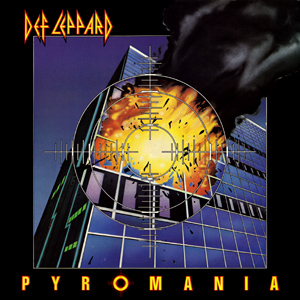
Paula Hawkins presented three record covers (Pyromaniaby Def Leppard, W.O.W. by Wendy O. Williams and Animal (Fuck Like a Beast) by W.A.S.P.) and the music videos for "Hot for Teacher", by Van Halen, and "We're Not Gonna Take It", by Twisted Sister, commenting: "Much has changed since Elvis' seemingly innocent times. Subtleties, suggestions, and innuendo have given way to overt expressions and descriptions of often violent sexual acts, drug taking, and flirtations with the occult. The record album covers to me are self-explanatory."
Susan Baker testified that "There certainly are many causes for these ills in our society, but it is our contention that the pervasive messages aimed at children which promote and glorify suicide, rape, sadomasochism, and so on, have to be numbered among the contributing factors." Tipper Gore asked record companies to voluntarily "place a warning label on music products inappropriate for younger children due to explicit sexual or violent lyrics."
National PTA Vice President for Legislative Activity Millie Waterman related the PTA's role in the debate, and proposed printing the symbol "R" on the cover of recordings containing "explicit sexual language, violence, profanity, the occult and glorification of drugs and alcohol," and providing lyrics for "R"-labeled albums.
In addition, Dr. Joe Stuessy, a professor at the University of Texas at San Antonio, spoke regarding the power of music to influence behavior. He argued that heavy metal was different from earlier forms of music such as jazz and rock and roll because it was "mean-spirited" and "had as one of its central elements the element of hatred." Dr. Paul King, a child and adolescent psychiatrist, testified on the deification of heavy metal musicians, and to the presentation of heavy metal as a religion. He also stated that many adolescents read deeply into song lyrics.
Opposing Witnesses
Musician and producer Frank Zappa asserted that "the PMRC proposal is an ill-conceived piece of nonsense which fails to deliver any real benefits to children, infringes the civil liberties of people who are not children, and promises to keep the courts busy for years dealing with the interpretational and enforcement problems inherent in the proposal's design." He went on to state his suspicion that the hearings were a front for H.R. 2911, a proposed blank tape tax: "The major record labels need to have H.R. 2911 whiz through a few committees before anybody smells a rat. One of them is chaired by Senator Thurmond. Is it a coincidence that Mrs. Thurmond is affiliated with the PMRC?" Zappa had earlier stated about the Senate's agreement to hold a hearing on the matter that "A couple of blowjobs here and there and Bingo! — You get a hearing."
Folk rock musician John Denver stated he was "strongly opposed to censorship of any kind in our society or anywhere else in the world", and that in his experience censors often misinterpret music, as was the case with his song "Rocky Mountain High". Denver expressed his belief that censorship is counterproductive: "That which is denied becomes that which is most desired, and that which is hidden becomes that which is most interesting. Consequently, a great deal of time and energy is spent trying to get at what is being kept from you." Incidentally, when John came up to give his speech, many on the PMRC board expected him to side with them thinking he would be offended by the lyrics as well but instead defended them.
Dee Snider of Twisted Sister, testified “Under the Blade", a song the PMRC claimed was about sadomasochism, bondage, and rape, was actually written about an impending surgery. He said "the only sadomasochism, bondage, and rape in this song is in the mind of Ms. Gore." He stated, "Ms. Gore was looking for sadomasochism and bondage, and she found it. Someone looking for surgical references would have found it as well." Snider concluded that "The full responsibility for defending my children falls on the shoulders of my wife and I, because there is no one else capable of making these judgments for us."
Notable snippets of audio from the hearing found their way into Zappa's piece "Porn Wars", from the “Frank Zappa Meets the Mothers of Prevention” album. Senators Gore, Hollings, Gorton, Hawkins, and others appeared. The album cover featured a parody of the RIAA warning label. The LP included a note to send to Zappa's Barking Pumpkin Records for a free "Z-PAC", (a printed information package that included transcripts of the committee hearing, and a letter from Zappa encouraging young people to register to vote). The liner notes on the U.S. release read:
WARNING/GUARANTEE:
This album contains material which a truly free society would neither fear nor suppress. In some socially retarded areas, religious fanatics and ultra-conservative political organizations violate your First Ammendment Rights by attempting to censor rock & roll albums. We feel that this is un-Constitutional and un-American. As an alternative to these government-supported programs (designed to keep you docile and ignorant). Barking Pumpkin is pleased to provide stimulating digital audio entertainment for those of you who have outgrown the ordinary. The language and concepts contained herein are GUARANTEED NOT TO CAUSE ETERNAL TORMENT IN THE PLACE WHERE THE GUY WITH THE HORNS AND POINTED STICK CONDUCTS HIS BUSINESS. This guarantee is as real as the threats of other video fundamentalists who use attacks on rock music in their attempt to transform America into a nation of check-mailing nincompoops (in the name of Jesus Christ). If there is a hell, its fires wait for them, not us.
On the back of the European version : The original version of this album contained political material which would not have been interesting to listeners outside the U.S. This special European edition contains three new songs not available in the U.S. album. We hope you appreciate the difference.
F.Z.
Here is a 3 part interview with Mr. Zappa regarding censorship and the Senate hearings:
PART 1
PART 2
PART 3
In October, President Ronald Reagan claims that "reactionary and obscene rock music does not deserve Constitutional protection”. Reagan states "I don't believe that our Founding Fathers ever intended to create a nation where the rights of pornographers would take precedence over the rights of parents, and the violent and malevolent would be given free rein to prey upon our children."
American Bandstand producers refuse to let Sheena Easton perform her hit song "Sugar Walls" because it has been targeted by the PMRC.
In November, the Recording Industry Association of America (RIAA) strikes a deal with the National PTA and the PMRC to create a universal parental warning sticker that will be placed on all albums containing graphic depictions of sex and/or violence. Many refer to it now as the Tipper Sticker.
William Steding, vice-president of KAFM in Dallas, forms the National Music Review Council, whose mission is to inform broadcasters and parents about controversial music.
The title of Marvin Gaye's song "Sanctified Pussy" is changed to "Sanctified Lady" for a posthumous release, Dream of a Lifetime.
Columbia Records wraps the Rolling Stones' Dirty Work in dull red plastic, hiding certain words and song titles.
Yes 1985 was a busy year for censors. But in 1986, CBS Music sets a strict, but vague, company-wide policy on explicit lyrics. The policy was meant to dissuade artists from releasing any albums that may be controversial.
After complaints from groups such as the Arab-American Anti-Discrimination Committee, the Cure requests that radio stations pull "Killing An Arab" from airplay. Composer Robert Smith says the song "was a short poetic attempt at condensing my impression of the key moments in L’Etranger (The Stranger) by Albert Camus" (Cure News number 11, October 1991). The lyrics describe a shooting on a beach, in which the Arab of the title is killed by the song's narrator; in Camus' story the main character, Meursault, shoots an Arab standing on a beach after staring out at the sea and being overwhelmingly blinded by the sun, reflected on the sea, the sand and the knife the Arab was holding. The track has a controversial history, since it has often been viewed as promoting violence against Arabs. In the US, The Cure's first compilation of singles, Standing on a Beach (1986), was packaged with a sticker advising against racist usage of the song. It became controversial again during the Persian Gulf War and following 9/11."Killing an Arab" was the only single from the The Cure’s 1st album not to be included on that album's 2004 re-mastered release. The song was revived in 2005, when the band performed the song at several European festivals. The lyrics, however, were changed to "Kissing an Arab". When they performed at the Royal Albert Hall on April 1, 2006, the lyrics were changed to "Killing Another". The song was used in its entirety for closing both nights of their Sydney, Australia, concerts promoting their Greatest Hits album to a standing ovation.
Meyer Music Markets places an "explicit lyrics" warning sticker on Frank Zappa's Jazz from Hell – This is funny because the album is entirely instrumental!
First Lady Nancy Reagan withdraws support for an eleven-hour anti-drug rock concert because promoters refuse to drop certain acts that were targeted by the PMRC.
The families of two young men sue the British heavy metal band Judas Priest, alleging their 1978 album Stained Class encouraged the young men to commit suicide. The band’s vocalist Rob Halford commented “if we wanted to insert subliminal commands in our music, killing our fans would be counterproductive and we would prefer to insert the command Buy more of our records". Regarding the prosecution's assertions that the statement "do it" was a command to commit suicide, Halford pointed out "do it" had no direct message. The case was eventually dismissed.
Maryland Delegate Judith Toth introduces legislation aimed at amending the state's obscenity statutes to include records, tapes, and laser discs.
Jello Biafra of the Dead Kennedys is charged with violating section 313.1 ("Distribution of Harmful Materials to Minors") of the California state penal code for a poster included in the band's Frankenchrist LP. The offending poster contained a painting by noted Swiss artist H.R. Giger.
In 1987, a part-time record clerk is arrested in April in Callaway, Florida, for selling a copy of 2 Live Crew's album 2 Live Is What We Are.
Radio stations in Pittsburgh, New Orleans, Cincinnati, Minneapolis, Denver, and New York ban George Michael's single "I Want Your Sex" because of explicit sexual content.
In an attempt to thwart an upcoming concert by the Beastie Boys, the city of Jacksonville, Florida, passes an ordinance in August that requires all "adult" acts to put a "For Mature Audiences Only" notice on all concert tickets and advertisements.
An unidentified congressperson commissions a study by the Congressional Research Service to determine if Congress has the Constitutional authority to regulate albums that contain explicit lyrics by restricting their sale.
MTV refuses to air the Replacements "The Ledge" because of its suicidal theme.
In 1988 many retailers refuse to stock Nothing's Shocking, Jane's Addiction's debut album for Warner Brothers, because of its cover.
A faculty advisor, at a Newark, New Jersey, student radio station yanks all heavy metal from the station's playlists in April because he believes it will cause young listeners to commit suicide.
The co-owner of Taking Home the Hits in Alexandria, Alabama, is arrested in June for selling a 2 Live Crew record to an undercover police officer.
After initially agreeing to broadcast the world premiere of Neil Young's "This Note's For You", MTV refuses to air the video clip. (The song is Neil Young's critique of artists who "sell out" and allow their songs to be used in commercials. It mentions Coke, Pepsi, Miller, and Bud.) The video pokes fun at Michael Jackson, with the line "Ain't singing for Pepsi," a Jackson lookalike is shown with his hair on fire, referring to the Pepsi commercial shoot where a spark sent his hair into flames.
Retailers across the country refuse to carry Prince's Love Sexy, protesting the record's cover, which contains a nude, yet unrevealing, photograph of Prince.
Protestors in Santa Cruz, California, picket retailers carrying Guns 'N Roses' debut album Appetite for Destruction, despite the fact that the offensive cover art has already been replaced.
In 1989, Yusef Islam, better known as folk singer Cat Stevens, is misquoted regarding the Ayatollah Khomeni's call for the death of The Satanic Verses author Salman Rushdie. Following press reports of the bogus statement, radio stations across the U.S. pull his records from play.
The City Council of New Iberia, Louisiana, enacts an emergency ordinance that adds music to the list of materials that must be kept from view of unmarried people under age 17.
The RIAA releases its black and white universal parental warning sticker in early March that reads, "Explicit Lyrics - Parental Warning."
A Pepsi commercial set to Madonna's song "Like A Prayer" is pulled after one airing because religious groups are offended by the song's video.
Guns 'N Roses are cut from the New York AIDS benefit "Rock And A Hard Place," because of the lyrics to their song "One In A Million."
Following complaints about Cher's video for "If I Could Turn Back Time," several video channels drop or restrict the music clip. Cher’s fishnet body stocking under a black one-piece bathing suit was the culprit.
MTV refuses to air a Fuzztones video that contains the lyric "rubbers" (a term for foul-weather footwear) they insist it be changed to "raincoat" before it will air the video.
The Hastings Record Store chain institutes a policy that states certain rap and rock titles cannot be sold to minors in its 130 stores nationwide.
The Pennsylvania house passes a bill requiring a warning label on all albums with explicit lyrics. The Pennsylvania legislators place the burden of enforcement and criminal liability on local retailers.
The Federal Communications Commission launches a campaign to clean up radio. They begin to hand out thousands of dollars in fines to stations in order to discourage them from playing risqué music.
Officials at the FBI write to gangsta rap group N.W.A. telling the performers that the bureau does not appreciate their song "Fuck Tha Police."
Also in1989, MTV enacts a policy that a lyric sheet must accompany all videos submitted to the network. The network rejects videos it feels endorses or promotes violence, illegal drugs, excessive alcohol consumption, or explicit depictions of sexual practices. ( Oddly enough, their programming seems to haveheaded into a less relevant mind numbing “reality” show format that maintains the violence, drug abuse, excessive alcohol consumption; but has nothing remotely to do with music.)
After protests from the gay community in September, Los Angeles radio station KDAY pulls from rotation the song "Truly Yours," by Kool G. Rap and D.J. Polo from rotation.
In Texarkana, Texas, city officials force the Dimension Cable Service to offer channel-blockers to prevent MTV from entering the homes of concerned families. After the channel-blockers are offered free of charge to Dimension's 22,000 subscribers, only 40 units are requested by customers.
"What is freedom of expression? Without the freedom to offend, it ceases to exist."
–Salman Rushdie
"Censorship is telling a man he can't have a steak just because a baby can't chew it." -- Mark Twain
The Root Note of All Evil
Throughout the entirety of musical history, self appointed critics and censors have blamed music for causing society’s ills. Every unfamiliar advancement has been disputed, whether it’s polyphony itself, Johann Sebastian Bach’s contrapuntal excursions, the syncopations of swing, the sound of distorted guitars, or the use of electronic synthesizers. In our so called modern times alone, jazz, bebop, swing, rock n' roll, and rap have all been lambasted seen as the root of all evil. These denouncements usually have been generational. That is to say adults attribute juvenile delinquency on some musical form that is popular with young people.
However, the voluminous majority of calls for censorship in the last century have been addressed to peripheral aspects of music. The dancing associated with it, visual images on its packaging, videos, and particularly prose attached to it. The lyrics. Lyrics however are words; and words are speech. Speech is very clearly protected by the 1st amendment in the U.S. constitution. Where music itself can indeed alienate people, (Often some understanding of underlying theories must be gleaned to comprehend its value), lyrics tend to be a more concrete form of expression. Only a working knowledge of the language is needed to understand the words, if not the ideas they represent. One can often construct a tenable, credible discourse on their value or non-value. Though I would suggest this is rather personal and subjective, as one man’s Ernest Hemingway is another mans Larry Flynt.
Is it a woman in front of a mirror or a nasty old skull? Who should decide?
Today we largely view censorship as a technique that has disappeared from liberal cultures since the enlightenment (with exceptions during wartimes). The enlightenment served to attenuate the intolerance of religious and government leaders, but did not stop censorship. Rather, bowdlerization of unacceptable ideas has merely fallen into new hands using new tactics. Censors masquerade as capitalist retailers, distributors, special-interest groups, and cogent religious or government agencies. The new methods are market-censorship (dominating and controlling the marketplace), institutionalized censorship (control of language itself), restricting knowledge, in addition to the traditional regulative censorship (laws). These new forces are at least as effective as the historical forces of ascendancy.
Once upon a time, the adventurous textures of J.S. Bach threatened his ability to make a living; the Elvis pelvis was a threat to society, and John Lennon’s political views vexed the FBI as well as the highest offices in the land. Today most objections regarding commercial music are about ugliness of some sort. “Those rappers are demeaning women, this song is about racism, that one promotes hate, violence and drugs are in this one, while still here is another that flies in the face of political correctness.Yet one must ask oneself if any song causes these things? Or are these songs simply reflecting the ugliness of the times? Does any piece of music really chisel away at society’s standards of morality? Does removing a song about beating women prevent anyone inclined to beat women from doing so? Is there really anyone not sure whether this is right or wrong, and only need to hear some hip hop lyric to push them into violent behavior? I suggest that censorship is not only more offensive than any words, it is also not effective. Making something taboo usually creates a demand for it, if only out of curiosity.
We live in a world where any subject covered in any song, that might be objectionable, is merely a mouse click away anyway. The question is do you believe the government, Clear Channel, or Wal-Mart should decide which music, books, newspapers, films, or photographs, etc. should be available?Shouldn’t parents be the supervisors of what they allow their own children to hear or see if indeed they are concerned about it? Regardless of whether we embrace or reject it, our world is full of genius, insight, and beauty but also worthless consumerism, devalued humanity, porn, hate groups, violence, insanity, grotesque greed, and tinseled trash. Is anyone terribly surprised music reflects this? If we accept that art does indeed hold a mirror to our world, our society, our subcultures, and ourselves; then if we dislike what we see in that mirror, smashing the mirror does nothing to improve our lot.


 2 of my favorite lyrics (though they all are quite interesting), are from the "Shine On Brightly" album:

 The Mayfire
 Cat Tasso
 I am a longtime fan of Ferry's approach to music, I've always believed he possessed one of the most unique voices in modern music. The fact that he did not get the gig with King Crimson allowed Roxy Music to flourish. I had the pleasure of seeing him do an entire evening of Cole Porter tunes a few years ago with a full orchestra. Truly stunning. Bryan is no stranger to "borrowed" songs but this CD is remarkable and a "must have". Here is a clip of "Just Like Tom Thumb Blues" from the David Letterman Show.